
The most famous ride along the stretch of Virginia between Richmond and Charlottesville was an all-night horse sprint on the evening of June 3, 1781. Jack Jouett, a farmer and the son of a local tavern keeper, spotted British forces amassing near the Cuckoo Tavern in Louisa County. Recognizing the danger to the colonial insurgents gathered in Charlottesville, he mounted his horse, Sally, and without hesitation began a forty-mile ride to Thomas Jefferson’s house.
Adrenaline must have been coursing through Jack’s veins as he darted down every shortcut he could find. He rode by moonlight through farm fields and along logging roads, beneath low-hanging branches and across river shallows. He arrived just before sunrise, in time to warn Jefferson and his revolutionary co-conspirators that Colonel Banastre “Bloody Ban” Tarleton and 250 British cavalry were close behind. If his horse, Sally, hadn’t galloped fast enough, the early embers of what we call the American experiment might have been snuffed out before they could ignite. For better or worse, we might be living in a very different world today.
It’s now almost 250 years later. It’s fair to say that rides and drives through central Virginia are almost entirely less thrilling than Jack’s famous one. While the story above might someday become a popular theme park ride or a Disney movie (especially if it focuses on Sally the horse as the real savior of the American Revolution), the actual experience for thousands of drivers traveling each day between Richmond and Charlottesville is far more subdued and somniferous.
The main road connecting the two historic cities is I-64, a multi-lane interstate that—no exaggeration—is one of the most forgettable highways in America. A solid wall of trees lines each side of the interstate. As you climb slightly in elevation from Richmond to Charlottesville, the ecological mix shifts ever so subtly—from loblolly pines mingling with deciduous trees to a blend almost entirely composed of mountain laurels and hardwoods. Just as gradually, your eyelids grow heavier as you realize these mundane natural features are all you have to occupy your attention during this 75-mile trek. There are no billboards showing dead babies, nor signs proclaiming that Jesus is the truth, the light, and the way. No scenic overlooks, and no violet-hued silhouettes of mountains in the distance. Just you and uniform, uninspired botanical drudgery.
This was what I endured making that drive over and over again in the 1990s. It was a time before digital streaming and the proliferation of audiobooks. Yes, there was radio; you could occasionally find gems on the airwaves, like broadcasts from the free-form community station WTJU. And the older car I owned could play cassette tapes, though my tapes were well-worn or warped in the sun beyond playability. But nothing beat having a passenger to talk with as I made that drive on dreary ol’ I-64 back then, which is how I first got to know Jason Molina. He was a young singer-songwriter from Lorain, Ohio, with bushy eyebrows and short bangs covering a slightly receding hairline. He was at the beginning of his music-making career, and, as it turned out, he would be the driver and I the passenger.
It was late winter, early spring of 1998. Jason was on his first-ever tour under the moniker Songs: Ohia. A Midwest snowstorm had canceled four of his first five shows—in Chicago, Madison, Minneapolis, and Ypsilanti—but things were getting back on track as he moved south and eventually east. He was now in Virginia, loading his amp and guitar into his car after a house show in Richmond. Acting on impulse, Jason asked one of his travel companions and informal tour manager, Chris Swanson—a kind, extroverted, straight-edge hippie from Indiana with whom I had been corresponding for months—if he would be willing to swap places with me. Chris agreed. He’d drive my car back to Charlottesville while I rode with Jason.
Before I go any further—about my time with Jason, his life-changing album The Lioness, and a new singer-songwriter, Lily Seabird, who recently inspired me to reflect again on the roots of the two record labels I’ve been part of for nearly 30 years—I should briefly digress to explain why I was at that house show in Richmond that evening.
The Charlottesville to Bloomington connection
The two years prior, 1996 and 1997, were a time when I was working multiple jobs in Charlottesville while coming to terms with the idea that I would never return to the University of Virginia as an undergraduate. In the cracks of my life then, of which there were many, I had become deeply involved in the local music scene. I promoted shows at Tokyo Rose, a venue in the basement of a sushi restaurant in a strip mall, a long walk from the main drag near the university grounds. I had also fallen in love with the music of local Virginia bands The Curious Digit and Drunk. Thanks to a windfall overtime paycheck I received for working long hours at a home for adults with mental disabilities—after a heavy snowstorm in C’ville—I started a record label called “Jagjaguwar” to release their music.
After my new “bedroom” label released The Curious Digit’s debut album, Bombay Aloo, the avant-indie-rock outfit was eager to bring their idiosyncratic pop songs to other scenes. But with no sales history and almost no fanbase outside of Charlottesville, they couldn’t find a booking agent to take them on. So I volunteered to book a tour for them, scraping together a four-date itinerary. Unfortunately, my amateur booking skills left much to be desired. The band faced very long drives between shows—235 miles from Charlottesville to the Nyabinghi Dance Hall in Morgantown, then 353 miles to the Bug Jar in Rochester, then 390 miles to Galaxy Hut in Arlington, Virginia, and finally 627 miles to their last performance at the Second Story in Bloomington, Indiana. This was over four straight days.
The Curious Digit’s well-worn van barely made it, even breaking down once in West Virginia. Yet, miraculously—perhaps conjuring the will and spirit of Jack Jouett and his horse Sally—the band didn’t miss a show. Their key show was their last, opening for Paul Oldham’s band, Speed to Roam. Paul was the younger brother of Will Oldham (Palace Brothers, Palace Music, Bonnie “Prince” Billy) and Ned Oldham (The Anomoanon). He studied audio production at Indiana University and later produced records for other underground bands in the extended “indie scene,” including Royal Trux and Gang Gang Dance. The Curious Digit were very interested in working with him on their next album. However, the show did not go well. Almost no one from Bloomington showed up to see the bands that night, and the venue was nearly empty. The members of Speed to Roam asked to open instead and then heckled The Curious Digit during their closing set, unimaginatively shouting “one more!” just two songs in.
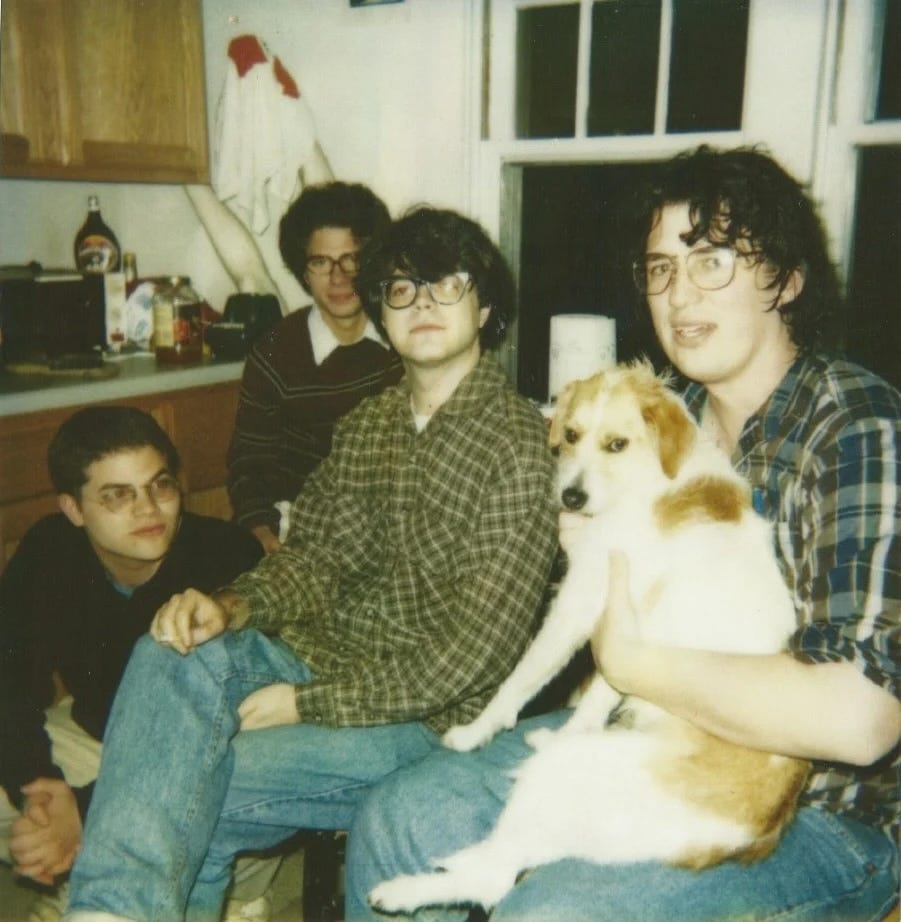
Adam Busch, the masterful lyricist of The Curious Digit, who usually exudes a warm demeanor—even though it sometimes masks a darker, more sensitive side—was so dejected after the show that he went to the parking lot outside the venue and shotgunned a six-pack of Olympia beer. The band members were too exhausted to drive part of the way back to Virginia that night, so they crashed on the floors and couches of Bloomington promoter Kristen Cox, a close friend of Chris Swanson, Jason’s travel companion I mentioned earlier.
The next morning, Chris socialized with the band as they prepared to return to Virginia. Their CD artwork for their Jagjaguwar release, printed on unconventional, uncoated paper stock, caught his eye. He was also intrigued that another label had started at the same time he had co-founded Secretly Canadian with his brother Ben and their college friends Jonathan Cargill and Eric Weddle. He asked Adam how to reach me, and Adam gave him my landline number—this was a time before the ubiquity of email, cellphones, and texting. Chris and I then began a regular series of very long phone calls—so regular and so long that Chris’s high school sweetheart and girlfriend from North Dakota, Kelly Raaf, often joked in her friendly, unassuming, and Nordic-American way that I had, in fact, become Chris’s mistress.
We compared notes on everything related to releasing records. I had a graphic design background and understood the intricacies of print production, while Chris and his partners, in their scrappy way, had become adept at getting their releases into record stores. On one of our calls, I learned that Chris was doing everything he could to help Jason Molina (aka Songs: Ohia) organize a viable tour, not only booking shows as I did for The Curious Digit but also planning to help with driving and merchandise sales. So I agreed to help set up two Songs: Ohia shows, one in Richmond and one in Charlottesville, which led to my meeting both of them that spring in 1998.
You said every road is a good road, between the next road and your last road
Jason was now behind the wheel, and I was in the passenger seat. We were driving down ol’ dreary I-64, two guys in our twenties shooting the shit for an hour and a half. Jason learned that I used to be a math guy who wanted to be an English-writing guy, but that I eventually stumbled into being a music guy. I found out that Jason’s family was from West Virginia, which didn’t surprise me—the back cover of his self-titled debut album, which he was selling copies of that night, included several references to geographic features of that “wild and wonderful” state John Denver dubbed “almost heaven.” I also learned that his dad was a teacher, that he had two siblings, and how he first connected with the Secretly Canadian fellas. We spent most of the rest of the drive regaling each other with details about the great music being made along a different highway, funny enough, I-65, one integer greater than the one we were on.
Back then, something special was brewing along the Chicago-to-Louisville I-65 corridor; iconic labels like Drag City and Touch & Go were on a roll, releasing one brilliant record after another by influential artists such as Slint, Palace Brothers (Will Oldham), Big Black, and Smog (Bill Callahan). The founders of these two labels, Dan Koretzky and Corey Rusk, placed a strong emphasis on integrity, especially in how people did business together and in the process of making and releasing records. At the epicenter of this world was Steve Albini. A prime force behind the legendary bands Big Black and Shellac, he was also a renowned recording engineer best known for his austere approach to “faithfully” capturing the sounds an artist or band performed in the studio.
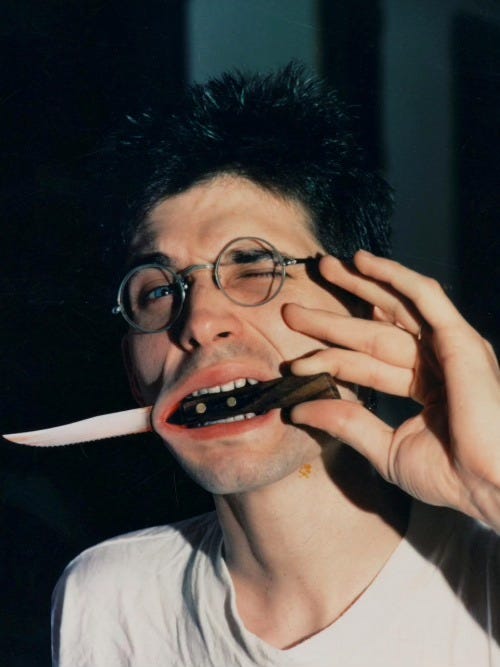
I would later learn that recording with Albini would have been an absolute dream for Jason, a dream that would become reality four years later when Albini engineered Songs: Ohia’s second-greatest album, Magnolia Electric Co. So, naturally, during the drive, the two of us fell into banter about Albini’s idea of authenticity, his refusal to be called a producer, and his view of his role in the studio as a service provider rather than an auteur. He wanted to be “paid like a plumber,” as he wrote in his famous letter to the band Nirvana. In our back-and-forth about Albini and what we thought he strived for in his recording work, I learned a few more things about Jason.
Jason saw himself as coming from a blue-collar background. He seemed drawn to people like Albini, who were self-assured, direct, and unafraid to speak their minds—ecstatic truth-tellers. Like Albini, Jason had little tolerance for braggarts, charlatans, or anyone who didn’t follow through on their promises. Accuracy in the details wasn’t overly important to him; he was known to spin a yarn or two himself, something I would learn about him in the years that followed (and he would eventually be dishonest with himself and others about his future alcohol addiction). But he valued his time, or rather, respect for his time, and the feeling of control that spending time on honest work gave him.
Jason also seemed more comfortable choosing between clear-cut binaries rather than parsing shades of gray. This is probably why he embraced, like his hero Albini, Jack Kerouac’s “first thought, best thought” credo, preferring his initial takes in the recording studio rather than wading into the murky waters of discerning which parts of which versions of songs were better. This approach, which favored simplicity over perfectionism, also kept the production wheels turning, helping him stay prolific as an artist.
I didn’t see this then, but maybe if I had been more perceptive, a better listener, I would have noticed how we kept returning to the same themes in our conversation: “honest work,” “keeping the wheels turning,” “respect,” “truth,” and the dignity, even clarity, of being “paid like a plumber.” Much later in my life, especially during some of my tougher personal moments, I would reflect on friends and acquaintances (and those in between) who left this material plane too soon—David Coonce, David Berman, and Jason Molina, to name a few—and consider what demons they were contending with when I knew them. For Jason, I thought about how his commitment to work and his identification as a worker—whether touring, recording, or songwriting—might have been his way of filling the large hole he had carried since childhood.
Or maybe, I would sometimes think, Jason sought refuge in music-making to distract himself from the harder, more internal work he needed to do to truly shift things for himself—work that might have felt, on the surface, unproductive to him. Either way, if losing himself in his work had become his go-to defense or coping mechanism, Jason seemed to become aware of this dynamic, even open about it. I often think about his classic song “Riding with the Ghost” from Magnolia Electric Co., where he sings, “I put my foot to the floor / To make up for the miles I’ve been losing.” Written and recorded in 2002, the song seems to be about contending with the possibility of personal loss or disconnection once again, as Jason resorts to his usual bag of tricks to get through it.
We rolled into Charlottesville very late at night. No British cavalry were on our heels, no danger in our hearts. Despite both of us being similar in some regards—introverted, private, more comfortable talking about our external lives than the spectacle within—I believe we found a small but meaningful measure of connection during that ride. I couldn’t help but feel that Jason wanted to give me something, to assist me in some way, or, at the very least, to let me know there was a spot for me on his frontier’s wagon. As I stepped out of his car, I noticed a few early-season moths frantically dancing around the canopy light on the street corner. We were different from them, I thought. While we, too, were carrying a burden of stories in the patterns of our wings, we could see that the moon was firmly parked in the Midwest. We knew which way was up, and I believe we had found some grace in our ride together, knowing we weren’t alone and that we were heading in the same direction.
I’m sure we’ll find new things to burn, ‘cause we are proof that the heart is a risky fuel to burn
The winter after I met Jason and Chris, I packed all my belongings into a rented U-Haul truck and, with the help of my friend Steve Shotwell, made my first “adult” move by driving to Indiana. I was leaving the East Coast for the “Middle West,” as F. Scott Fitzgerald’s character Nick Carraway affectionately called that cornfield-filled region west of Pennsylvania. For Carraway, the Middle West was the moral, steadier place of his youth, before he was ensnared by the hedonism and callousness of the Great Gatsby’s faster-moving East Coast of the 1920s. While my circumstances in Virginia in the 1990s were vastly different and far less gilded (I wasn’t contending with or trying to leave behind a life of excess or indifference), I was seeking something steadier than what my life had become, which, back then, was a relentlessly rotating schedule of day and night jobs to make ends meet. I was almost 27 and needed a new foundation, a fresh start, maybe even a new tribe to replace my fraying connection to my own family, who didn’t understand why I had abandoned my formal education at UVA.
The catalyst for my decision to move to Bloomington was the long phone calls I had been having with Chris, which continued well after those Songs: Ohia shows in Virginia. At some point during our joint daydreaming, I invited Chris to co-own Jagjaguwar with me. He said yes enthusiastically, but in turn invited me to move to the Midwest. So it came to pass that I would soon share a small office, one phone, and one computer with Ben, Chris, and Jonathan in the home Chris owned. I would soon learn to scavenge for used boxes behind grocery stores, collect used printing paper from Indiana University computer labs, and manually roll back fax toner rolls to get a few more legible pages before we had to use one of the expensive replacement cartridges. I would also soon find myself outnumbered in too many debates, including whether the Y2K bug was something we really had to worry about and whether IU’s legendary basketball coach Bobby Knight had to pay out of his own pocket for the many lunches we witnessed him receiving at the nearby Marsh grocery store deli.
It was an austere yet highly productive time as the six of us (including Secretly Canadian partner Eric and our first employee, Mary Hallinan) scrambled to get Secretly Canadian, Jagjaguwar, and related companies, Secretly Distribution and Bellwether Manufacturing, off the ground. I remember my personal financial hardship back then: at various times I needed to sell my compact discs at the local record store TD’s CD and LPs to help pay my rent, and sometimes I stole oranges from Chris’s girlfriend, Kelly, from the top of their refrigerator when I was short on cash and had hunger pangs. It was also a lonely time for me—I’d never watched so many movies, mostly Japanese samurai films, by myself. But it helped immensely that my Charlottesville-sisters-forever, Rayna Stowe and her best friend Sarah Wyatt (who later married Ben), followed me to Bloomington. All in all, those early years in Bloomington were both grounding and transformative, shaping who I am today as much as any period of my life.
Although there were enough clues right in front of me, given how smoothly Chris recruited me to move to Indiana—I sometimes joke that I am Chris’s greatest signing—little did I know then that this straight-edge hippie would become the great connector and recruiter in our circles and for our labels for decades to come. I would soon learn that Chris’s genius had two horns. He was a voracious consumer of music and culture, a trait he shared with his brother Ben, who was trapped with him for too many days in the toasty interior chambers of their Fargo, North Dakota, home during the brutally cold winters of their childhood—with only records and VHS tapes to keep them company. I can still count on one hand the number of people who can speak as deeply and comprehensively about the canon of recorded music as Chris.
The other horn of his genius was social. More than anyone, Chris could make those around him feel loved and connected, and he genuinely became personally invested in their lives. He never missed an opportunity to be there when it counted most, whether it was a joyous event like a wedding, a funeral for someone close to one of his friends, or helping someone get out of the mental ward of a hospital or find a safe place to live while dealing with addiction (something he did for Jason years later).
Chris’s personality was so infectious that one “very important band” on Jagjaguwar, Oneida, gave him the nickname “Contact High,” which was right on the money. That’s why I had so many long phone calls with him in the first place. That’s why influential labels like Temporary Residence, Western Vinyl, and Sufjan Stevens’ Asthmatic Kitty Records committed to Secretly Distribution in its early days. That’s why ANOHNI would take a leap of faith and entrust Secretly Canadian with her Mercury Prize-winning album, I Am A Bird Now. This community-building work Chris did went beyond networking for himself and was never about self-aggrandizement. Rather, he was naturally attuned to helping others connect, including by encouraging me, who had a reclusive streak, to meet in person with brilliant people such as Justin Vernon, Richard Youngs, the members of Black Mountain, Julie Doiron, and Will Sheff. Whether he intended to or not, Chris forged a welcoming, refuge-like environment in Bloomington that, with the support of Ben, Jonathan, and Eric, would entice even a cautious Jason Molina to move to Bloomington when the young songwriter was broke and newly single in 1997.
After Jason first arrived in Bloomington in 1997, he lived in the unfinished basement of Chris and Kelly’s home on North Maple, which also housed the Secretly Canadian “office” (for lack of a better term). By the time I arrived in Bloomington in early 1999, Jason had already moved out of that basement and was living with his new girlfriend, an intelligent, crimson-locked IU student named Darcie Schoenman, who was in her last year of college. I got to know both of them a little through hangs at Chris and Kelly’s home, by running into them around town, or at Jason’s shows. But I never became close to them, even though I did feel some kinship with Darcie because she was a fellow math nerd. Perhaps it was a combination of Jason keeping people at arm’s length and my own tendency back then to revert to a defense mechanism of negative humor—something my friends would call turning “Coco”—that was to blame. (My Coco-persona, along with a dash of East Coast-bred arrogance, ultimately delayed the Midwestern clan from becoming endeared to my personality.)
It was during this time—when Jason, Darcie, and I overlapped in Bloomington, before the two of them moved to Chicago together—that Jason was writing, performing, and recording the songs that would become his greatest work, the album The Lioness. It was also a period when the Secretly Canadian partners remained unsure about their relationship with Jason, who had clearly become their flagship artist and had achieved meaningful renown outside the Midwest. After releasing the Hecla & Griper EP with Secretly Canadian, Jason decided to release his second album, Impala, with Ohio-based Happy Go Lucky Records. Although he then released his next well-received album, Axxess & Ace, with Secretly Canadian, the Secretly Canadian partners still felt uncertain whether Jason considered Secretly Canadian his long-term home. This insecurity was fueled by a Midwest-attuned impostor syndrome that I, too, shared, which would linger in our subconscious for decades as Secretly Canadian and Jagjaguwar became more formally entangled as part of Secretly Group, even lingering a bit after we launched the Dead Oceans label with Phil Waldorf.
Back then, our shared psychology was always inundated with self-doubt. How could we compete with the sass and cool of Sub Pop, the operational prowess of Touch & Go, the artist-led authority of Merge, or the intoxicating irreverence of Matador? We weren’t on the coasts, we weren’t in the big cities, and we were just getting the hang of making records and distributing them around the world. But to also successfully publicize them around the world, how in the hell do you get that done from landlocked Indiana?
Jason recorded what he thought were his Lioness songs in Scotland at the beginning of that year. After sharing the recordings with Chris, Ben, Jonathan, and Eric, a consensus emerged—shared by both the artist and the label—that the recordings, and to some extent the songwriting, weren’t good enough. Chris had suggested that Jason replace some of the more working-class-themed songs from that session with newer songs he was performing live at the time. It was a fragile moment. Too often, when label honchos discuss with an artist how a recording or a piece of art needs to be redone, adjusted, or augmented, the relationship becomes irreparably damaged. Coupled with the aforementioned impostor syndrome and Jason’s tendency to be one-and-done with his recordings, the Secretly Canadian fellas must have felt some anxiety about this particular album conversation, especially since it was the first time they had not readily accepted what Jason had delivered.
Fortunately, no drama unfolded. Chris and Jonathan had committed to accompanying Jason on his summer European tour, during which Jason would return to the same studio in Scotland, Chem19, to rework the album. Jonathan, who would become close to Jason in the years to come, would play drums in both the touring band and the new studio sessions, alongside Geof Comings and Alasdair Roberts. Jason felt the direct fruits of the support he was receiving from the hard-working Secretly Canadian crew, and, as work was his love language, this strengthened the bonds and trust between artist and label. Without any additional fuss, Jason reworked and then re-delivered to Secretly Canadian a truly monumental work, just before departing with Darcie for Chicago.
We were lightning across the whole world
It didn’t occur to me until recently that The Lioness was not only a perfect album, in both tone and substance, but also the first definitive masterpiece1 of the new millennium.
But when it was released in 2000, the album received lukewarm praise or was overlooked entirely. The renowned music-criticism site Pitchfork, still in its early days then, gave the album a 76 (out of 100). The reviewer, Meg Zumaya, offered a backhanded compliment: “…the only thing preventing me from fully embracing these songs is the stereotype of the predatory woman that runs theme-like throughout them.” Put aside for a moment that her comment reflects a fundamental misunderstanding of what The Lioness is about. The simple reality was that Jason’s fourth album did not set the world on fire upon its initial release.
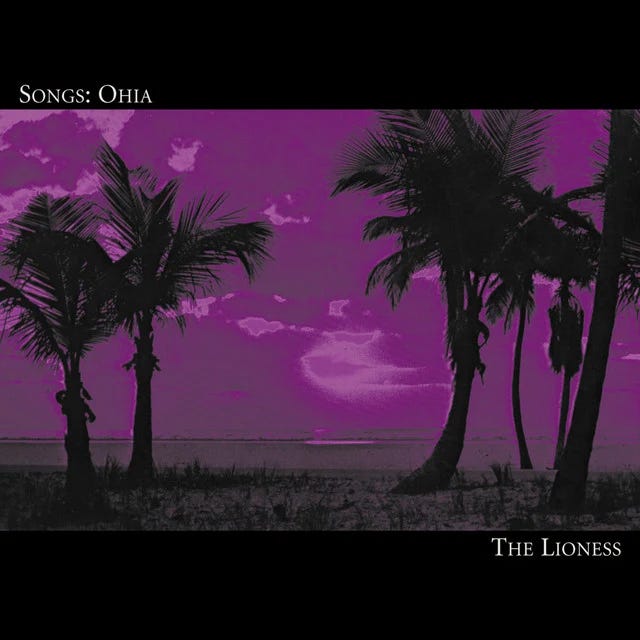
The Secretly Canadian partners (and I, by extension, though I was not yet one of the label’s owners) couldn’t grasp how special the record was either, at least not back then. We were too close to both Jason and the process of making the recordings to be objective. If any of us held strong beliefs about its artistic merits at the time, those beliefs were surely kept in check by our Midwest-infused modesty and our aforementioned impostor syndrome. After all, we had recently witnessed Jason get into it with his “hometown” crowd at a Second Story show in Bloomington for not being respectful and quiet enough while he was performing so many of the Lioness songs. Would he be able to handle the vicissitudes of a nastier, far more indifferent world outside the Midwest?
The Lioness wasn’t high-fidelity or an ambitious studio project with a hands-on, creative producer. While it was thematically coherent, it wasn’t a concept album. Nor did it have any songs that were fit for radio. All nine songs—or rather, I should say eight songs, because the last track was really just a musical reprise of the first, using the same chord progression—put Jason’s inimitable voice front and center. Throughout, the guitar tone is resonant but restrained, accompanied by a spare, laid-back rhythm section that leaves the listener plenty of acoustic space to sit with their feelings. There are no virtuosic instrumental performances on this album, which is not a denigration of what Cargill, Comings, and Roberts contributed; their steady accompaniment was crucial to the scene-setting. Rather, the undeniable magic was in Jason’s words, how he emoted them, and the spaces he chose in the songs for them to occupy.
In every part of The Lioness, the words leaving Jason’s mouth are forthright and unwavering. His lines “I’m getting weaker, I’m getting thin / I hate how obvious I have been” (“The Black Crow”), “‘Cause we are proof that the heart is a risky fuel to burn” (“Being in Love”), and “Want to feel my heart break if it must break in your jaws” (“Lioness”) are coming straight from the heart of a man of resolute spirit—almost as if he were a character right out of Gabriel García Márquez’s Love in the Time of Cholera. Jason singing these songs while standing and wearing his guitar—that was when he seemed most willing to open himself up and share his yearning, hoping for just one more sip of vital, connective energy from someone. As I listen again to the album, I can’t help but feel I am hearing the invocations of the great Chilean poet Pablo Neruda come alive through Jason.
The word was born
in the blood,
it grew in the dark body, pulsing,
and took flight with the lips and mouth.—an excerpt from Pablo Neruda’s “The Word”, translated
Jason’s most devastating song, however, and the one that, for me, is the veta madre of The Lioness, is “Coxcomb Red.”
Coxcomb Red (abridged)
I wanted that heat so bad
I could taste the fire on your breath
And I wanted in your storm so bad
I could taste the lightning on your breath
I watched you hold the sun in your arms while he bled to death
He grew so pale next to you
The world is so pale next to you
Your hair is coxcomb red, your eyes are viper black
You said every road is a good road
Between the next road and your last road
Every love is your best love
And every love is your last love
And every kiss is a goodbye
Desire, grief, rebuilding again, losing again. Then, right there in plain sight, the album’s most devastating lyrics: “And every kiss is a goodbye.”
Much has been written and shared about Jason’s detachment from his mother, who struggled with alcoholism while he was growing up. It’s a well-known pattern that survivors of such neglect struggle with attachment throughout their lives. They often find themselves stuck in a cycle of clinging to someone or someplace that feels safe and nurturing—a base or a safe harbor, so to speak—only to spend so much of their energy fretting about losing what they’ve found again, which inevitably sabotages their new connection.
While this song, to some extent, is about Jason’s newfound love for Darcie, it’s also about all his previous loves and the hole he’s been desperately trying to fill since he became accustomed to taking lonely hikes along the shores of Lake Erie in his youth—walks he took because his mother had kicked him and his siblings out of their trailer home so she could lose herself in drink. (A beautiful and heartbreaking examination of Jason Molina’s life, the travails of his youth, and the eventual decline of his health as he struggled with the same alcoholism that his mother contended with can be found in Erin Osmon’s excellent book Jason Molina: Riding With the Ghost.)
Without intending to, Jason had written what, on the surface, resembles a Pablo Neruda love poem. “Coxcomb Red” evokes the senses, relies on over-the-top nature imagery, and exalts unfettered desire. But beneath the song’s surface, there’s a more subtle, darker subtext. Perhaps, subconsciously, Jason is borrowing the sleight of hand that made Emily Dickinson’s or even Sylvia Plath’s works so poignant, and that may ultimately be the source of his power as a songwriter. It’s the stuff, not obvious yet undeniably true, that seeps from his unconscious into the slipstream of his creations, the ghosts he leaves for us to discover within his songs.
Falling into this record again, I wondered why it took me so long to see it for what it was—a staggeringly vulnerable testament to the maelstrom of love and loss that swirls inside all of us. I suppose it sometimes takes a newer work or artist to open your eyes to what has happened in the past, helping remove your blinders and recenter your perspective. This linking of the new to the old, and vice versa, is a culturally reinforcing dynamic that music writers like Will Hermes and Steven Hyden have recognized, which is why they have made it their practice to cover both newer and older works in their writing.
With the same esprit de corps, writer Mike Conklin recently introduced his followers to a new song by Vermont-based artist Lily Seabird, “Election Day.” I came across the post, loved the song and Conklin’s take on it, and noticed that Lily was releasing her songs on Lame-O Records, which is supported by one of the companies I am part of, Secretly Distribution. I reached out to the label’s owner, Eric Osman (not to be confused with Erin Osmon, whom I mentioned earlier). He immediately sent me Lily’s new album, Lightspheres on Their Way, and I quickly became enamored with it. Not only did I discover what I am pretty sure will be my favorite album of the year, but delving into Lily’s music also inspired me to re-engage more fully with Jason Molina’s catalog, which led me to see The Lioness in a whole new light.
But every path just multiplies and even good dogs wander where lions lie, and I always said I’d fight for you, never saw myself leaving too
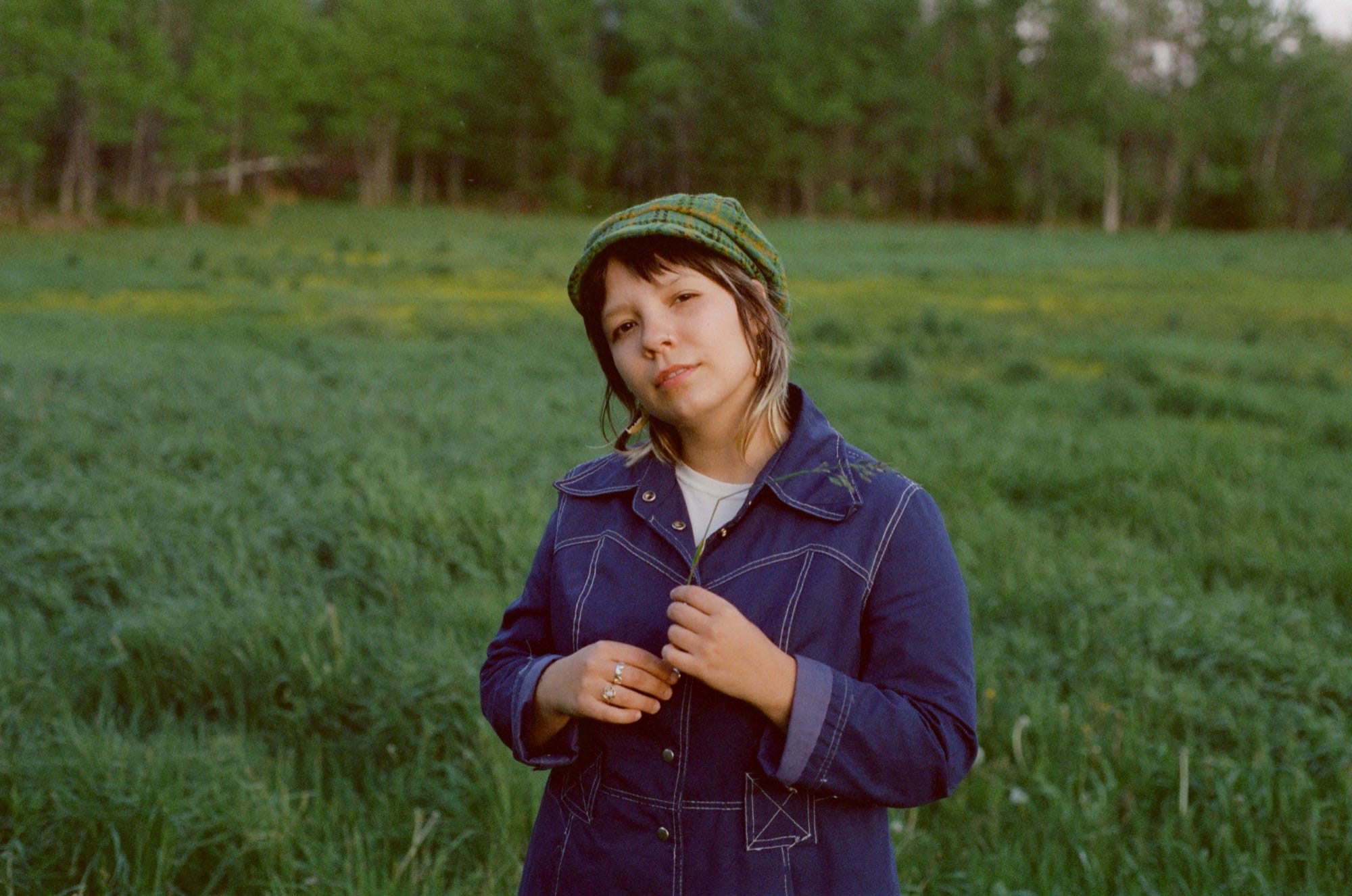
Lucky for me, I got to meet Lily Seabird when she visited us at our Secretly offices in Brooklyn this past July. She was wearing a long blue dress. She had lived in New York City before, briefly attending the New School. It must have been that when she left the Big Apple for Vermont, she had some unsettled business with the city, because now the city was meeting her with unbearable heat and humidity. It was giving her the opposite of red-carpet treatment; rather, its sidewalks were scorching to the touch. Lily walked many blocks to get to us, and after she arrived, she asked for glass after glass of water.
We hung out in the listening room, and my friend and colleague Jon Coombs joined us. Our conversation was freewheeling. Lily shared everything about herself, including her brief involvement in political activism in the Northeast, where she spent a lot of time going door to door to enact positive change, even helping to ban plastic straws in at least one state. Much as I accidentally got into the music business 30 years ago, it seems she fell into music and songwriting after becoming close with other musicians in Vermont. Eventually, she told us that recording and performing songs is the only thing she wants to do right now and that she wants to work at it very seriously. In that moment, I couldn’t help but think of Jason’s work ethic and relentless approach, and of how he told me during that 1998 evening ride from Richmond to Charlottesville that recording and touring were his entire focus.
But whereas it was Jason’s personality to keep things close to the vest, especially with people he had just met, Lily was the opposite. She was an open book, exuding such warmth and enthusiasm with almost every utterance that it was a joy to listen as she shared details about her work ambitions, her childhood, her family life, and what she was doing now in Burlington, working at a coffee joint. We learned that when she was a teenager, she had run away to live on the West Coast with her father (who she is close with and who is the biggest Dinosaur Jr. fan!). She gushed about her relationship with Eric at her label, Lame-O Records, and shared other personal family details that she hadn’t decided yet whether she wanted to speak more openly about in the future, in interviews or more public conversations. However, without revealing anything that is not my place to, I can say that we learned that she did contend with some of the same ghosts and afflictions within her family as Jason did, and the impact of those experiences reverberates throughout her songwriting.
Like The Lioness, Lily’s new album, Lightspheres on Their Way, is a tidy nine tracks with absolutely no filler. Every song packs so much in. And while only three of the recordings—“Election Day,” “Portal to the Past,” and “Afterglow”—are available now on mainstream digital services (the physical album comes out in early September, and the full digital album comes out in October), I’m not sure these three “lead” singles are even the three best songs on the album. It’s that deep.
While Lily’s songwriting reminds me of Jason’s in one very important way (more on that in a moment), their songcraft is not too similar. Lily is far more loquacious than Jason, stringing words together in the vein of Angel Olsen, David Berman, or Bob Dylan, and, like them, she relies more on narrative elements than Jason does. If the great writers from Lorain, Ohio, form a spectrum, Lily as a writer is definitely much more Toni Morrison than Jason Molina. And while she does sing a lot of words in some songs, she has a gift, like all of these singers, to deliver her words in just the right way so they always land with the right level of emotional impact.
Her music, supported by a stellar crew of musicians—Rick Soszynski, Daniel Snyder, Eliza Niemi, Sam Atallah, and Garrett Linck (who also did exemplary work engineering and producing the album)—may inevitably be pigeonholed by music writers as Americana or Alt-Country. But really, the album leans more toward confessional rock, emo-folk, or Southern boogie rock, or somewhere in between, and has more in common with the music-making of J Mascis than with Jeff Tweedy. The album occasionally showcases traditional singer-songwriter approaches but never introduces twang or other country music elements.
When I first heard her song “Portal to the Past,” I was viscerally stunned. I remember emailing Lame-O label head Eric Osman an “OMG” and then skipping back to it over and over. This passage, in particular, at the very end of the song, makes me well up every time I hear it, especially because of the force with which Lily’s voice delivers it.
Then I saw the lines on my hands and the marching band just fades away
Replace it with a dull roar of booze and cocaine
Sitting on some guy’s porch a thousand miles away
Well I said I’d give you everything, but time took it all away
And just before these lightspheres well they go and fade to black
Know I loved you more than anything and I’d never take that back
It was only after a few more listens to the album that it dawned on me. That is when I first realized how Lily reminds me of Jason Molina. It is because, as songwriters and performers, they share a singular quality that is perhaps the most important an artist can have. Simply put, their songs and performances convey the capital-T truth.
Every song on The Lioness and Lily’s new album is a testament to this. When I hear their voices on these songs, I believe them so deeply. And when I say this, I don’t mean I buy into everything these two humans say or have said, or the literal meaning of their lyrics—Jason was known to spin yarns, as I mentioned before, and I don’t yet know Lily well. But I cannot find a single iota of anything artificial, fake, or contrived in their songs. Everything they express on these albums feels genuinely lived, whether consciously or unconsciously, and the category of truth they have put in my ears, my heart, and my mind is the one I care about most, because it is about the big spectacle within. Perhaps this is why I’ve always gravitated toward inward-looking artists like Lily Seabird, Jason Molina, Bill Callahan, Justin Vernon, Phoebe Bridgers, or Frank Ocean, to name a few—even when the approaches of these songwriters are so different from each other—and why I have always been less inclined to explore works by more extroverted, pop-oriented superstars who seem out of touch with me or even with themselves.
I am so grateful to have been introduced to Lily, because it helped me reconnect with Jason’s legacy and the past in such a nourishing way. And the past is what I am thinking about today as I am at the airport, about to embark for Bloomington, Indiana, to celebrate the 30th anniversary of the founding of Jagjaguwar and Secretly Canadian with so many friends.
While I am looking forward to spending time with many of the people I mentioned in this memoir, I am also looking forward to spending time with some I don’t yet know well, including new staff at the labels and people I’ve known for some time but, for one reason or another (or because I lacked objectivity or my Coco-persona was a barrier), I wasn’t able to connect meaningfully with.
Jason’s old band, Magnolia Electric Co., is playing tonight at the Bluebird, performing many of his songs. In addition to experiencing Jason’s music again with hundreds of friends and family, I am really looking forward to seeing some of the people who were part of Jason’s support system as he was spiraling downward, including Jason Groth and Pete Schreiner. I am also hoping to reconnect with many of the other artists performing, especially my beautiful friends Sharon Van Etten and Kevin Morby.
And, of course, I’ll be thinking about who is missing, especially Jason Molina.
My friend Martin Mills, the founder of Beggars Banquet Records and the Beggars Group, once told me that every great label has one big artist who puts it on the map, establishing its new, higher place in the world. For him, that artist was The Prodigy, whose 1994 release Music For The Jilted Generation gave Martin’s record businesses an immense boost. He suggested that for us, it was Bon Iver, and our “we have arrived moment” came when Jagjaguwar released For Emma, Forever Ago.
Yes, our friendship and partnership with Justin Vernon were life-changing, as were the breakout successes of other artists we later partnered with, including Mitski and Phoebe Bridgers. However, I don’t believe it was Bon Iver, or any of the others, who gave us our wings or the confidence to keep going. It was Jason Molina. His work ethic, loyalty, and (ecstatic) truth-telling shaped who we are today. As he played show after show, capturing heart after heart, our sense of belonging grew immensely. We are no longer impostors. And now, instead of being moths trapped in orbits around street lamps or the moon, or on a tractor beam to the Midwest, as Jason and I were in the late 90s, we can make our own light. Hopefully, we will be able to share it, for years to come, with emerging artists like Lily Seabird, who are following in Jason’s footsteps and sacrificing so much so they can give back to us and the whole world nothing but the Truth. ☀
That The Lioness is the first definitive masterpiece of the new millennium is a bold claim. But I believe the only other two contenders for this distinction—albums released in that first month of the new millennium—would be D’Angelo’s Voodoo and PRMLSCRM’s XTRMNTR. Both received a healthy amount of critical acclaim (ranked 2 and 13 on Metacritic’s best-of-the-year list), but both came out after The Lioness.
awesome, what this platform is built for
Inside a wonderful, delightful, interesting essay, is this fantastic line:
"The cool of Sub Pop, the operational prowess of Touch & Go, the artist-led authority of Merge, or the intoxicating irreverence of Matador"